


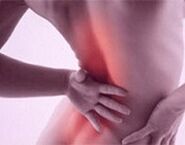
Lumbar osteochondrosis is one of the most common forms of the underlying disease, osteochondrosis itself. Lumbar osteochondrosis, the symptoms of which are equally pronounced in both men and women, manifests itself in the form of pain concentrated in the sacral region and reflected in symptoms in the lower extremities, which are often independently defined by patients as a “pinched lumbar nerve”.
General description
Most often, the form of osteochondrosis under consideration develops against the background of back injuries and a sedentary lifestyle;Accordingly, people whose particular professional activities involve strain on the back are automatically at risk of developing this disease.And these are not only office workers, who of course belong to this group, but also loaders, construction workers, service workers (e.g. waiters), drivers, etc.
Heredity also plays an important role when considering thoracic osteochondrosis.The probability here is not much, not little, but about 60% if the disease is present in close relatives.The rest is influenced by environmental factors that have some influence on the spine.
Lumbar osteochondrosis, like its other forms, is characterized by pain of varying severity, which can be aching, can occur after sleeping or after a long stay in the same position (when sitting for a long time, standing), but can also be stabbing and sharp.In the latter variant, they arise as a result of long-term adoption of a not very comfortable posture with the simultaneous impossibility of carrying out measures to straighten oneself in such a situation, as a result of which such a posture and the associated stress are eliminated.Pain sensations themselves arise from pinching under the corresponding influence of the nerve roots, as well as from irritation of the nerves in the spine, irritation of the ligaments and muscles (concentrated in the area of innervation, i.e. the actual location of the nerves in the relevant region that control them) and swelling.
It is important to note that this type of osteochondrosis in isolated form is extremely rare, and therefore the course of the disease is most often accompanied by the symptoms of cervical osteochondrosis, which we will consider in our next article.
The general and earliest symptom relevant to all forms of osteochondrosis, as already mentioned, is the manifestation of pain, which in this case is determined by a specific localization, that is, pain in the lower back.The spread (radiation) of pain can be observed on the thighs and buttocks, as well as on the legs (from the outer surface).
The term used to define osteochondrosis in its expanded version (degenerative-dystrophic lesion), relevant to the intervertebral disc, actually implies a complex of pathological conditions, significant in its diversity, directly related to various types of structures of the spine (spine), namely intervertebral discs, joints and osteophytes.The same problems that are directly related to disc damage are its bulging and discogenic pain.Types of osteochondrosis and focuses.
Protrusions in lumbar osteochondrosis
Most often, protrusions appear in this area of interest to us;In addition, it is bulges that cause pain in the lower back.The lumbar region itself, due to its location and nature, is the most susceptible to the occurrence of certain functional problems.
That is, if we look at this statement from one side, we can emphasize that our center of gravity relates directly to the lumbar spine and, accordingly, it bears a significant part of the loads.Looking from the other side, you can see that a significant range of motion falls precisely on this lumbar area.Against this background, the greatest tendency to damage (and also the protrusions that are of interest to us) is in the intervertebral discs, which are concentrated in the lumbar area.In addition, we must not forget that intervertebral disc changes in this and of course other areas also occur against the background of age-related degenerative processes.
Let's remind our readers what protrusions actually are.The connection between the intervertebral discs in the spine is ensured by intervertebral discs based on cartilage tissue.The main components of the intervertebral disc are the nucleus pulposus and the fibrous ring, which ensures fixation within the intervertebral disc.The influence of certain factors and conditions provokes the possibility of rupture of this ring, against the background of which, in turn, protrusion of the core occurs.As a result of this process, an inguinal hernia occurs.As for the protrusion, it is already developing as a result of a similar process, but without the accompanying rupture of the ring - in this case it undergoes only thinning and not rupture, since the core protrudes directly through the ring.In fact, this lead is defined as a lead.
The symptoms of protrusion are as follows:
- feeling of stiffness in the lower back;
- pain in the lumbar region;
- chronic lower back pain;
- lumbosacral radiculitis;
- Numbness, pain, tingling in toes, feet;
- Impaired urination (in rare cases of the pathology in question).
Conservative treatment is primarily used for lumbar disc herniations.Meanwhile, projections that are developmentally significant are often accompanied by severe symptoms that are resistant to treatment;In this case, surgical intervention is no longer possible.
Lumbar osteochondrosis: symptoms
Pain in this form of osteochondrosis is expressed in different variations in intensity.It can be aching pain that occurs especially after sleeping or after sitting for a long time, but it can also be stabbing pain that is stabbing in its severity.In addition, the manifestation of the latter is often noted at the moment when one takes an uncomfortable position and cannot straighten up.Any type of pain is directly related to the effect on the nerve endings, muscle swelling, irritation and pinching to which the nerve roots are subjected.Pain is also associated with irritation of the lumbar ligaments in the area of innervation of their nerve endings.
With this form of osteochondrosis, increased pain in the lower back is observed when coughing and sneezing, including when moving the body (especially when bending forward).
In addition to back pain, lumbar osteochondrosis can also manifest itself in the form of sensory disorders in certain areas (skin, lower half of the body, leg muscles).It is also possible that the tendon reflexes in the legs become weaker or disappear completely.As a rule, it is osteochondrosis that provokes the development of curvature of the lumbar spine.
Based on the specific level of actual curvature, osteochondrosis is divided into the following types:
- Kyphosis – in this case there is a flattening of the lumbar region and often an arching of the back;
- Lordosis – the spine bends forward;
- Scoliosis – the spine is curved to the left or right.
Pinching of the roots belonging to the spinal cord as a result of the development of osteochondrosis in the lumbar region is often detected in the form of a number of specific disorders, namely disorders of defecation or urination, disorders accompanied by sensitivity in the genital or perineal area.
Pain usually occurs (and worsens) as a result of the strain of physical activity.A painful reaction in this case can be observed both after this load and some time after the impact.Essentially, the patients' complaints in this regard are limited to the occurrence of dull and aching pain in the lumbar area, which sometimes also radiates into the leg, which is known as lumbodynia.In addition, there may be pain in the leg that increases when trying to lift something heavy (lumbago).The same applies to sneezing and coughing, driving while shaking, changing your posture and staying in the same posture for a long time.
As a result of an exacerbation of the respective disease, there is constant and pronounced tension in the back muscles, which manifests itself in the inability to carry out straightening or movement actions.Every movement is accompanied by increased pain.In addition, the patient experiences acute pain in the lumbar spine (which is also called “lumbago”) even after spending a short time in cold conditions.
Symptoms of lumbar osteochondrosis also occur in the following cases:
- reduced sensitivity of the thighs, buttocks, legs and feet (which occurs somewhat less often);
- Spasm of the arteries of the feet, increased chilliness of the legs;
- Tingling in the legs, “goosebumps”;
- Peeling and dry skin in an area where there is usually loss of sensation or pain;
- Sweating disorders.
The most unpleasant complication that occurs against the background of osteochondrosis is vertebral instability, in which the intervertebral disc no longer properly fixes the vertebra.This, in turn, provokes a “slipping” of the lumbar region from the sacrum under the influence of gravity when the load is applied to the lumbar region.This can cause not only unpleasant but also dangerous dysfunction of the internal organs.The genitourinary system particularly “suffers”;This manifests itself in potency problems in men and problems in the limbs, uterus and ovaries in women.
Manifestations of lumbar osteochondrosis
According to the most complete classification, a number of specific syndromes relevant to lumbar osteochondrosis are identified.These include in particular the following syndromes:
- Reflex syndromes – these include lumbar ischalgia, lumbodynia and lumbago;
- radicular syndromes – vertebrogenic (or discogenic) sacrolumbar radiculitis, the course of which is mainly accompanied by damage to the first sacral root or the fifth sacral root;
- radicular-vascular syndromes – radiculoischemia manifests itself as a process of vascular compression (especially veins or arteries are subject to compression), while compression occurs simultaneously with the root.
Let's briefly outline what the listed syndromes are.
LumbodyniaThis is particularly chronic pain that occurs gradually after prolonged exposure to an uncomfortable posture or after prolonged sitting, as well as after physical activity affects the body and a specific area.
Lumbagomanifests itself in the form of acute lumbar pain, which is called “lumbago”;Lumbago occurs primarily when lifting heavy objects or when a movement is unsuccessful.Sometimes lumbago is also observed after coughing or sneezing.
Diseases associated with lumbar osteochondrosis
Lumbar osteochondrosis occurs not only in combination with pain and other listed symptoms, but also in combination with some characteristic diseases of internal organs.
For example, more than 30% of patients with clinical symptoms associated with lumbar osteochondrosis note certain problems related to the liver or the functions of the gastrointestinal tract.The fact is that the presence of a certain disease of the gastrointestinal tract, pancreas or liver, in addition to pain impulses, also provokes tension in blood vessels and muscles, as well as spasms, which leads to a state of oxygen starvation with the simultaneous development of a degenerative process in certain areas of the body.The process is aggravated by metabolic disorders inherent in this type of disease.
In addition, as already mentioned, pain in the lower back can provoke the development of diseases of the pelvic organs.Women can suffer from a disease such as inflammation of the appendages (which is defined as adnexitis), and men, in turn, experience all the “joys” of prostatitis, that is, inflammation of the prostate.
The manifestations of lumbar osteochondrosis are also accompanied by congestion symptoms in the pelvic area, which develop as a result of the above-mentioned diseases, including chronic colitis, hemorrhoids and constipation.
Treatment
The treatment of osteochondrosis is usually multi-component and quite complex to implement.Essentially, all treatment measures boil down to the following points:
- drug treatment;
- if necessary, surgical treatment;
- Diet;
- Physiotherapy.
An exacerbation of the disease initially requires the patient to rest in bed.The main recommendation for this part is a hard/hard sleeping place.Extremely pronounced seizures require minimal physical activity and timely consultation with an appropriate specialist.The appearance of symptoms indicating the possible relevance of lumbar osteochondrosis requires contacting a neurologist.